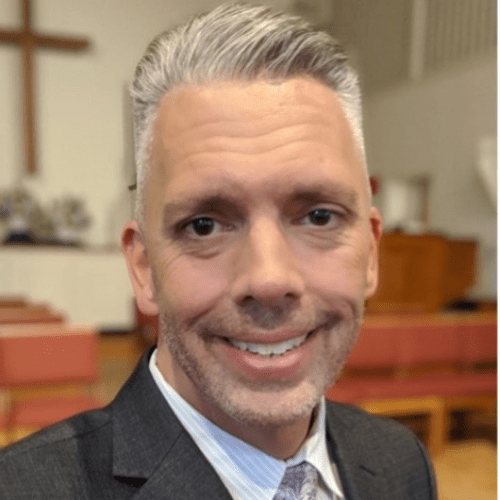
Sermon for April 21, 2013 / Easter 4

Trading Sorrows
April 21, 2013

Back when Newsweek was still with us, the magazine ran a poll asking what people thought about heaven. At that time, 76 percent of Americans said believe in heaven, and, of those, 71 percent thought it’s an “actual place.” People could not agree on the specifics, though Nineteen percent thought heaven looks like a garden, 13 percent said it looks like a city, and 17 percent had no idea.  The New Testament’s fullest descriptions of heaven were also battle cries. After the Romans crushed Jerusalem in A.D. 70, Middle Eastern cities teemed with festivals honoring the Roman emperors. The earliest Christians had a dilemma. “To what extent do we join the mainstream culture?” they wondered. “Do we attend without participating, participate without believing, or believe without embracing?” The Book of Revelation drew the battle lines. Revelation’s descriptions of thunder and lightning and lakes of fire, as well as its promises of pearl gates and jeweled walls, were warnings to the earliest Christians: Do not worship the Roman emperors. Stay faithful to your God and Jerusalem will be restored and you will live in a magnificent city forever. So, we get visions like this from John the Seer:

Then I saw a new heaven and a new earth, for the old heaven and the old earth had disappeared. And the sea was also gone. And I saw the holy city, the new Jerusalem, coming down from God out of heaven like a bride beautifully dressed for her husband. I heard a loud shout from the throne, saying, “Look, God’s home is now among his people! He will live with them, and they will be his people. God himself will be with them. He will wipe every tear from their eyes, and there will be no more death or sorrow or crying or pain. All these things are gone forever.” And the one sitting on the throne said, “Look, I am making everything new!” And then he said to me, “Write this down, for what I tell you is trustworthy and true.” And he also said, “It is finished! I am the Alpha and the Omega—the Beginning and the End. To all who are thirsty I will give freely from the springs of the water of life.” — Revelation 21:1-6

I have a problem. How dare we think about some far off new heaven when people are dying, starving and killing each other in our world?  How dare we talk about a new heaven, when we see evidence of Hell on earth, like the bombings at the Boston Marathon last week? In my most cynical days, I see people acting out on unrestrained craving, and egoistic behavior, unleashed upon others with no hope of improvement or escape. Hell on earth makes us anxious. Scared. Afraid of a future where love is gone and God fails to act.
And what about this talk of a new earth? How dare we dream of a new earth when we can’t take care of the one we’ve been given to take care of? How dare we dream of a fresh new start after we make this one unlivable for our species? Some use the promise of a new earth as an excuse to hollow out our current planet for resources. The argument goes like this: the earth is headed for destruction, and there is going to be a new heaven and a new earth anyway, so why bother taking care of this earth. It was made to pass away. The sooner it does, the sooner we get the new one. As much as I hate to say it, a lot of the anti-environmentalism we see around us today comes from Christians. It’s all summed up well in the bumper sticker I saw on the back of a behemoth SUV sporting a Christian fish sign that read: “Friends don’t let friends become environmentalists.”

The new world described by John is the joining of the previous world and heaven to form a renewed realm of peace, prosperity and faithful love. In Revelation 21, John arrives at the climax of hope for his audience. They have listened to his description of several dismal images displaying the horrific force of evil and the mighty hand of God in judgment. Now he is able to soothe their ringing ears with a promise that God not only will address their present circumstances but also will finally correct every deviation from his original creation. John sees Heaven and earth join together as one.  He is not saying that God will simply wipe everything away to begin again with nothing.  God will not making all things anew. God is making all things as new. Our current earth is not a precursor to a replacement planet once our disregard for the environment causes an irreversible catastrophe (if it hasn’t already). The second earth, or new earth, is the renewal of creation. If we want to see a new earth, then we need to see our care of it as a mandate from Christ. Or to be blunt, disregard for creation is disregard for God.

I guess a little touch of some new heaven and earth would be a good think right now. Last week showed the worst of what the current earth and its citizens offer: terrorism in Boston, genocide in Syria, floods in the Midwest, community-leveling explosions in Texas. Not to mention the inability of our Senate to look the families of the Sandy Hook shootings in the eyes and pass a simple forearm background check law. Wouldn’t even a taste of that in our lives today be wonderful? Just a little joy in the bleak moments…a second of spiritual comfort in the midst of turmoil…peace in the thick of our hectic lives? How do we get to experience even a little bit of that new heaven and earth – just a sliver of that renewal here and now?

If I had to define what heaven is, I’d say Heaven is the destination of ultimate joy. Not some future home on a cloud. Not some vindication after a doomsday. Building a new heaven and new earth is a journey – a day-by-day set of choices we make, that over time lead us to joy. I think we one of the things we can to do build the renewed and renewing heaven and earth is to choose joy. So, how might we choose joy as a way to renew creation?

1. Choose joy through perseverance.

If the book of Revelation teaches nothing else, we can learn to keep on keeping on. It’s baseball season, so let me tell you the story about Clint Courtney. Clint never came close to making it into the Baseball Hall of Fame. He wasn’t a legend in his own time — not even in his own mind. But a few die-hard fans were inspired by his tremendous perseverance. Clint played catcher for the Baltimore Orioles in the 1950s. During his career he earned the nickname of Scrap Iron. Clint was weathered and tough. Old Scrap Iron broke no records — only bones. He had little power or speed on the base paths. As for grace and style, he made the easiest play look rather difficult. But armed with mitt and mask, Scrap Iron never flinched from any challenge. Batters often missed the ball and caught his shin. Their foul tips nipped his elbow. Runners fiercely plowed into him, spikes first, as he defended home plate. Though often doubled over in agony, and flattened in a heap of dust, Clint Courtney never quit. Without fail, he’d slowly get up, shake off the dust, punch the pocket of his mitt once or twice, and nod to his pitcher to throw another one. The game would go on and Clint with it — scarred, bruised, clutching his arm in pain, but determined to continue. Some made fun of him, calling him a masochist. Insane. Others remember him as a true champion. What kept him going? I guess he really loved baseball.

Hang in there, even when life gets really gritty and rough. And make no mistake, life gets really tough. Curve balls come. We get knocked down. We have a reason to hang in there. We love this earth. We love each other. And we want to make life together work.
2. We can choose joy through obedience.
Joy is a sign that the Holy Spirit is alive and working in your life. Joy begins to bloom when obedience to Jesus works its way into the fabric of our daily lives. Imagine that you work for a company whose president found it necessary to travel out of the country and spend an extended period of time abroad. The President says to you and the other trusted employees, “Look, I’m going to leave. And while I’m gone, I want you to pay close attention to the business. You manage things while I’m away. I will E-mail you regularly and I will instruct you in what you should do from now until I return from this trip.” The boss leaves and stays gone for a couple of years. During that time the boss writes often, communicating her desires and concerns. Finally she returns. She walks up to the front door of the company and immediately discovers everything is a mess — weeds flourishing in the flower beds, windows broken across the front of the building, the secretary at the front desk dozing, loud music roaring from several offices, two or three people engaged in horseplay in the back room. Instead of making a profit, the business has suffered massive loss. Without hesitation she calls everyone together and barks, “What happened? Didn’t you get my messages?” You say, “Oh, yeah, sure. We got all your Email. We’ve even printed your messages and the bound them in a book. You know, those were really great letters.” I think the president would then ask, “But what did you do about my instructions?” No doubt the employees would respond, “Do? Well, we did nothing. But we read every one!”

Do you know anyone like that, a person who knows God’s expectations? That person might have even read the Bible from cover to cover, but doesn’t live it out. There’s no obedience, and therefore no joy. I am fairly clear on what God wants us to be doing: Take care of the earth’s resources. Feed the hungry. Visit the prisoner. Clothe the naked. Tend to those in need. Stand up for those who have no voice. Bring those on the margins to the center of the action. Live lives of peace and compassion.  Doing these things can bring great joy.

3. Choose joy by trading sorrows

There is something to be said for disciplining ourselves to be positive in the midst of life’s difficulties. I read a story about Gary — the kind of guy you love to hate. He is always in a good mood and always has something positive to say. When someone would ask him how he was doing, he would reply, “If I were any better, I would be twins!” He was a natural motivator. If an employee was having a bad day, Gary was there telling the employee how to look on the positive side of the situation. Seeing this managerial style, a curious observer approached Gary and said, “I don’t get it! You can’t be a positive person all of the time. How do you do it?” Gary replied, “Each morning I wake up and say to myself, ‘Gary, you have two choices today. You can choose to be in a good mood or you can choose to be in a bad mood. I choose to be in a good mood. Each time something bad happens, I can choose to be a victim or I can choose to learn from it. I choose to learn from it . . . Life is all about choices . . . You choose how you react to situations . . . The bottom line: It’s your choice how you live life.”

Several years later, Gary did something you are never supposed to do: he left the back door of his business open one morning and was held up at gun point by three armed robbers. While trying to open the safe, his hand slipped off the combination. The criminals panicked and shot him. Luckily, Gary was found quickly and rushed to the local trauma center. After 18 hours of surgery and weeks of intensive care, they released Gary from the hospital. About six months after the accident, when people asked him how he was, Gary replied, “If I were any better, I’d be twins. Wanna see my scars?” Someone asked him what went through his mind as the robbery took place. Gary replied. “The first thing that went through my mind was that I should have locked the back door. Then, as I lay on the floor, I remembered that I had two choices: I could choose to live or I could choose to die. I chose to live . . . When they wheeled me into the ER and I saw the expressions on the faces of the doctors and nurses, I got really scared. In their eyes I read, ‘He’s a dead man.’ I knew I needed to take action. There was a big burly nurse shouting questions at me. She asked if I was allergic to anything. ‘Yes,’ I replied. The doctors and nurses stopped working as they waited for my reply. I took a deep breath and yelled, ‘I’m allergic to bullets!’ Over their laughter, I told them, ‘I am choosing to live. Operate on me as if I am alive, not dead.’ Gary lived thanks to the skill of his medical team, but also because of his amazing attitude.
Every day we have the choice to live against the odds, and this can bring great joy. This can bring some renewal.

We do not have to live in defeat. We can trade our sorrows for God’s joy. Live with purpose. Do what you love. Choose joy. When enough of us can do this together, maybe we will find some of the renewal we want to see.

I’d like to leave you with an excerpt from a letter by Fra Giovanni Giocondo . Giovanni was an architect, engineer, and classical scholar who was born in Verona around 1433 and died in 1516. This letter was written to a friend on Christmas Eve, 1513. It’s words are ancient but still meaningful.

I salute you! There is nothing I can give you which you have not; but there is much, that, while I cannot give, you can take.

No Heaven can come to us unless our hearts find rest in it today. Take Heaven.

No peace lies in the future which is not hidden in this present instant. Take peace.

The gloom of the world is but a shadow; behind it, yet, within our reach, is joy. Take joy.

God is making all things as new. We might not see it, but we may need to affirm it anyway. God is making all things new, and God can use us to help make it happen. In the face of the worst this world has to offer, may we all find a way to take some joy and know the unity of heaven on earth, here and now.

Sources:

http://vulpeslibris.wordpress.com/2008/09/11/revealing-revelation-a-biblical-%E2%80%98green-print%E2%80%99-for-our-ecological-future/

http://www.etsjets.org/files/JETS-PDFs/40/40-1/40-1-pp037-056_JETS.pdf

Posted in Uncategorized | Comments Off

Sermon fro April 14, 2013 / Easter 3

Revelation and Liberation: Lamb on the Throne

Then I looked, and I heard the voice of many angels surrounding the throne and the living creatures and the elders; they numbered myriads of myriads and thousands of thousands, singing with full voice, “Worthy is the Lamb that was slaughtered to receive power and wealth and wisdom and might and honor and glory and blessing!” Then I heard every creature in heaven and on earth and under the earth and in the sea, and all that is in them, singing, “To the one seated on the throne and to the Lamb be blessing and honor and glory and might forever and ever!” And the four living creatures said, “Amen!” And the elders fell down and worshiped. Revelation 5:11-14

The book or Revelation is a strange and wonderful gift. Much of the imagery of the modern horror film industry comes from this unsettling book of scripture. These hallucinogenic and ominous images all come from the pages of the last book of the Christian New Testament: The Antichrist; 666; The Lake of Fire; The Four Horsemen of the Apocalypse; The Seventh Seal; The Mark of the Beast.  Remember when bar codes first came out, some Christian groups were worried that they were a fulfillment of the prophecies of the Book of Revelation. When the first UPC scanners arrived in the early 1970s, there were protests at grocery stores — even though the codes appeared on Coke cans and jars of applesauce, not right hands and foreheads. And in the years that followed, an urban legend arose, warning gullible types that the number 666 was hidden in each bar code. Some claimed that the inventor of the bar code was a tool of Satan. With what proof? His name is George Joseph Laurer. Each of his names has six letters! All together: 666!

The imagery in the Book of Revelation reaches shocking levels of violence. While the tradition of the Gospel of John is has Jesus talking about love as a new commandment, we wonder if John’s tradition of love was lost on this writer who claims to belong to the same school of thought, with all his talk of plagues and punishment.

Here’s what’s happening up to the point of today’s reading from Chapter 5. A Christian named John is held as a prisoner for his faith on the small island of Patmos off the western coast of what is now Turkey. It’s the Lord’s Day, what we call Sunday – the day of the week on which we celebrate Jesus rising from the dead. On the Lord’s Day, an elaborate vision comes to John. In the beginning of the vision, John looks up to heaven and sees a door standing open. A voice invites him to come up and take a look. There, at the center of the scene, is a throne surrounded by a rainbow. And someone sits on the throne. This someone looks like two precious stones: one the color of amber, the other the color of flame. From the throne come sights and sounds: flashes of lightning and peals of thunder. In front of the throne stand seven burning torches. Encircling the throne are 24 other thrones, on which are seated 24 elders wearing white robes and golden crowns. In front of the throne is a sea of glass like crystal. Beside the throne are four remarkable creatures, each of them with many eyes and six wings, and each with a different face. These four creatures an unceasing song: Holy, holy, holy, the Lord God the Almighty, who was and is and is to come. It is John’s vision of heaven. As this song sounds forth, the two dozen elders cast their crowns before the throne and sing their own hymn celebrating God as creator.  We sing about this scene in one of our beloved hymns. “Holy, Holy, Holy! All the saints adore thee. Casting out their golden crowns around the glassy sea.”

John looks again at the gem-like figure on the throne and sees that the figure holds a scroll, a scroll sealed with not just one seal, but seven — a scroll whose contents remain secret. Then John hears an angel cry out loudly, “Who is worthy to open the scroll and break its seven seals?’ Nobody speaks. Nobody in heaven, on earth, or under the earth is worthy to do this.

John starts to weep bitterly. The scroll that nobody is worthy to open is the scroll of history. To open it and read it means to make sense of the past, to discern the meaning behind events, to carry out the Creator’s intention for creation. But the scroll remains unread, sealed seven times over. History remains a painful riddle.

John is not alone is his tears. Many of us have wept with him. When we run straight into the hard edge of life, when we see suffering unabated, evil unchecked, justice notoriously absent, when we count up the crimes and blasphemies and terrors that fill the chronicles of yesterday and the news magazines of today, when we do not witness redemption and release, when good seems impotent and moral monsters hold sway–whenever these things appear before us, and we have a heart, then we too, like John, must weep, and our tears are bitter.

Maybe we need a vision of heaven? I don’t know. If it’s as terrifying as what John claims to see, I don’t know if I want to experience it.  There are plenty of benign, harmless scenes of heaven that aren’t so appealing, either — some bright place tucked behind a galaxy where birds chirp and organs play with heavy tremolo and angels bounce from cloud to cloud. By the way, this image is used by advertisers to sell items as unremarkable as cream cheese – a beautiful women wearing a size-two angel outfit and a tilted halo enjoying a bagel and cream cheese atop a fluffy cloud. Now for some this may be a remarkable vision of things to come. For me, though, it’s remarkably boring.

Why even worry about Heaven right now? There are people dying, starving and killing each other in our world. We face depression, loneliness, fear, anxiety, and grief on a daily basis. We are too busy to think about some future promise like Heaven. But, if the idea of Heaven doesn’t have some day-to-day impact on the suffering we go through here and now, it is useless. What if Heaven could touch us today? What if Heaven isn’t just some future eternal bliss, but a reality to our Christian lives here and now? What if our tears could remind us that we carry and inarticulate grief about the world around us and need some hope. What if heaven was a reminder that we sometimes filled with heavy sadness that dims the atmosphere where all of us struggle to live. We grieve. We mourn. We cry. We need visions and dreams that keep help us make sense of our history and meet the future with hope.

Back to the book of Revelation.  So, we left off at the seven seals. No one can open the scroll. John weeps. One of the elders, dressed in a white robe and a golden crown, one of that worshipping assembly, addresses John and addresses us as well. “Do not weep,” he commands. “The Lion of the tribe of Judah, has conquered, so that he can open the scroll and its seven seals.” John wipes his eyes and looks again. What he sees is the strangest sight of all the strange sights throughout his vision. The elder promised him a lion, and what stand before him is a lamb.  Near the throne, is a lamb who bears the marks of slaughter. The lamb takes the scroll of history from the figure seated on the throne.

The heavens cheer for the lamb who was once dead and is now alive forever. Their cheers encompass the ecstasy and gruesomeness of life. They sing, “ You are worthy to take the scroll and to open its seals, for you were slaughtered and by your blood you ransomed for God saints from every tribe and language and people and nation; you have made them to be a kingdom and priests serving our God, and they will reign on earth.” Then the entire universe erupts in song, with creatures in heaven and on earth, under the earth and in the sea, bursting forth with a cosmic cheer: “To the one seated on the throne and to the Lamb be blessing and honor and glory and might forever and ever!”

Someone has come to dry our tears. Those tears we weep when we run straight into the hard edge of life, when we see suffering unabated, evil unchecked, justice notoriously absent, those tears we weep when we count up the crimes and blasphemies and terrors that fill the chronicles of yesterday and the news magazines of today, those tears we weep when we do not witness redemption and release, when good seems impotent and moral monsters so often hold sway. Someone has come to dry those tears.

It reminds me of the story I heard about a woman who is given a tour of heaven and hell.  In hell, she sees hundreds of hungry people in a room full of banquet tables.  The banquet tables overflow with delicious food and amazing aromas, and all the people have spoons.  The spoons have long handles, just too long so the people in hell could not feed themselves – they cannot get the food into their mouths.  So they are eternally tortured by their hunger in a room full of delicious food.  The tourist asks about heaven. The tour guide says that heaven is much more pleasant.  The room looks a lot like this one but everyone there is very happy at their banquet.  The woman asks, “In heaven do they have shorter spoons?”  The tour guide says, “No, the spoons are the same and the food is the same.  But in heaven, they feed each other.”

The elder promised a lion, but what we see is a lamb, slain yet alive, meek yet triumphant – the lamb who died on a cross, rises from a grave, and lives and reigns forever. Easter faith proclaims that a new power has been let loose in the world through the Easter victory of Jesus. This is the power of the Lamb — the power of the Lamb to help us create heaven on earth – to work in gentle, steady, loving ways to forge a world of peace, liberty, compassion and justice for all, not just a few – a world of people with long spoons where we feed one another. The power of the lamb declares . . .
A love stronger than hatred.
A reconciliation stronger than separation.
A forgiveness stronger than sin.
A joy stronger than sorrow.
A peace stronger than violence.
A hope stronger than despair.
A life stronger than death.
The power of the Lamb! “To the one seated on the throne and to the Lamb be blessing and honor and glory and might forever and ever!”

Sources:
Violence and Nonviolence in the Book of Revelation, by Matthew J. Streett

http://www.wired.com/wiredenterprise/2012/12/upc-mark-of-the-beast/

http://www.lectionary.org/Sermons/Hoff/NT_Other/Rev%2005.11-14,%20PowerLamb.htm

http://www.salon.com/2012/03/04/revelations_the_bibles_scariest_book/

Posted in Uncategorized | Comments Off

Sermon for March 24, 2013 / Palm Sunday

Even Stones Cry Out

Jesus went on toward Jerusalem, walking ahead of his disciples. As he came to the towns of Bethphage and Bethany on the Mount of Olives, he sent two disciples ahead. “Go into that village over there,” he told them. “As you enter it, you will see a young donkey tied there that no one has ever ridden. Untie it and bring it here. If anyone asks, ‘Why are you untying that colt?’ just say, ‘The Lord needs it.’” So they went and found the colt, just as Jesus had said. And sure enough, as they were untying it, the owners asked them, “Why are you untying that colt?” And the disciples simply replied, “The Lord needs it.” So they brought the colt to Jesus and threw their garments over it for him to ride on. As he rode along, the crowds spread out their garments on the road ahead of him. When he reached the place where the road started down the Mount of Olives, all of his followers began to shout and sing as they walked along, praising God for all the wonderful miracles they had seen. “Blessings on the King who comes in the name of the LORD! Peace in heaven, and glory in highest heaven!” But some of the Pharisees among the crowd said, “Teacher, rebuke your followers for saying things like that!” He replied, “If they kept quiet, the stones along the road would burst into cheers!” Luke 19:28-40

(Holding a stone, reverently) =Do you hear it saying anything? I haven’t heard any over-the-top-joyful, ear-drum piercing, contagious shouts for joy this morning — yet. I hoped that this stone would begin to sing or shout, maybe something like: “Peace in heaven, and glory in highest heaven!” or, “Hosanna! Blessed is He who comes in the name of the Lord!”

Didn’t we just hear Jesus say that if his followers were silent, the stones would burst into cheers? When was the last time you joyfully praised God with such a loud voice that someone had to tell you to sit down and be quiet? Let’s listen carefully to the stone again.

Jerusalem has stones everywhere. We hear a lot about the holiness of the rocks in Jerusalem, especially when it comes to the adoration of ancient stones. Jews pray at a stone foundation called the Western Wall — all that’s left of their holy temple. Muslims pray at the Dome of the Rock — the third holiest site of Islam that sits atop the old Jewish Temple. Listen carefully to these stones. Are they singing the praises of God? The stones of Jerusalem have witnessed bloodshed, cruelty and atrocity. It’s part of the ancient city’s history. Jerusalem today still hangs on the edge of destruction. As the stones are thrown by Palestinians at Israelis and by Israelis at Palestinians, those stones may be whispering echoes of Jesus’ words when he visits Jerusalem, Jesus looks at the rocks of the old city and says, “Jerusalem, Jerusalem the city that kills the prophets and stones those who are sent to it” (Lk. 13:33).

It’s as true right here in our lives as it is in the Holy City. That’s what we do, sometimes. We throw stones. You know it. You’ve thrown some stones in your life. I’ve done it, too. Stones of inadequacy – stones that say, “Go away. I’m not worth your time or love.” Stones of arrogance – stones that say, “My way is better.” Stones of isolation – stones that say, “I can do this all by myself. I don’t need you.” Stones of fear – stones that build walls instead of a home in which all are welcome. Stones of immaturity – stones that say, “I don’t want to grow. I don’t want to take responsibility. Just let me play by myself.” Stones of prejudice – stones that say, “You’re different from me. You’re not wanted or needed around here.” Stones of defensiveness – stones that say, “Don’t change or challenge me. Let me stay in my narrow little world.” Stones of violence that deny another’s dignity and humanity.

Listen to these stones. Are they singing praise?

This stone in my hand is not from Jerusalem. It’s not a holy stone from a shrine. It’s an ordinary hunk of Maryland quartz. It’s job is to get in my way when I’m trying to mow the yard. I move it around from place to place. Sometimes I hold it and listen. But it hasn’t said anything to me yet.

Poet Annie Dillard writes about a neighbor who lives alone with a stone. He is trying to teach the stone to talk. He spends time each day at their lesson. She writes: “He keeps it on a shelf. Usually the stone lies protected by a square of untanned leather, like a canary asleep under its cloth. Larry removes the cover for the stone’s lessons, or more accurately, I should say, for the ritual or rituals which they perform together several times a day.” Some, of course, laugh. They laughed at Jesus, too. God only knows which parts of creation are filled with messages for us. I suspect the problem is that we do not have the ears to hear. Or maybe it’s not an ear problem. Maybe it’s a heart problem.

When the Bible talks about the heart, it’s often used as a symbol. The heart refers to our emotions, thought or will. The biblical writers saw the heart as the seat of moral responsibility. The problem is that from the beginning of human existence, the place that controls our desire and will to follow God has been diseased. The Bible talks repeatedly about the various spiritual heart diseases:

There’s the condition of an unclean heart. Hear the words of King David after he sleeps with another man’s wife and has her husband killed. He cries out, “Create in me a clean heart, O God . . . “ (Psalm 51:1).

There’s the condition of a deceptive heart. These days the popular assumption is that the heart is basically good. The prophet Jeremiah thought differently. “The heart is deceitful above all things and desperately wicked: who can know it?” (Jeremiah 17:9)

Then there’s the disease of a stony heart. A stone is dead. It has no feelings. Talk to it; it will shed no tears of pity, even when you tell it your saddest tales. No smiles will gladden it, even when you tell it the happiest story. It has no consciousness. Prick it and it will not bleed. Stab it and it cannot die. You can’t make it wince or show any emotional response. Tears are lost on it. You can try to threaten it, but you might as well be whistling into the wind. All these efforts fall hopelessly to the ground because a stone is dead, and hard, and cold.

As we approach holy week, we remember a Sunday that began with the waving palms and cries of celebration turned into stony silence by Friday. Jesus rides to the cross. Friday’s stone-cold darkness will swallow up all the joyful shouting that rang in the streets on Sunday. No palms waving. No disciples shouting. The open mouth of the stone tomb is sealed with a stone. And we wait for the stone to speak.

You know how today’s story ends: Once, long ago, on the first day of the week, at early dawn, the women found the stone rolled away from the empty tomb. They were frightened. I get it. When there’s a Palm-Sunday-type parade or a party, we might be willing to shout and sing. But when God mixes that celebration up with suffering and death, we become awkwardly silent. Our hearts grow fearful and cold. Even when we know the end of the story is good news of life, joy and peace, it can be hard to wave our branches and cheer. How can we shout our joyful praises of God in the midst of a world that seems so stony, so cold, so unresponsive to love and so far from the peace of Christ? How can we wave our palms when we realize that we have let our hearts become hard as rocks?

(Addressing the stone) I’m waiting for you to cheer. I’m waiting for you to tell me the hidden things that make for peace and joy. Listen! Can you hear this stone’s cries? Listen, and listen, and listen.

I may never teach my stone to speak. But it may teach me to listen. The stones we stumble over, the stones we throw, the stones that others may throw at us, the stones rolled away from the tombs of our lives . . . they all have a message. We may discover that we do indeed have ears to hear what Jesus is saying to us. This time we might hear and recognize the time of God’s visit.

This time God’s peace may not come in the tears of a rabbi entering Jerusalem on a young colt. It may not come with fanfare and waving palms. This time God’s peace may arrive in your neighbor – the crazy one teaching a stone to talk, the caring one who bakes you cookies, the lonely one waiting for an invitation to anything, or the angry one taking you to court. Learn from the stone. Listen to it. Don’t let God’s visit pass you by Listen. Listen to these stones speak. Listen and recognize God’s presence in them. You may just find yourself shouting joyful praises.

Sources:
• http://www.motherflash.com/sermons/range/palmpassionc4.html
• http://interruptingthesilence.com/2010/02/28/the-road-to-jerusalem-is-paved-with-the-stones-of-rejection/
• “The Stony Heart Removed”, A Sermon Delivered on Sunday Evening, May 25th, 1862, by C. H. SPURGEON, At the Metropolitan Tabernacle, Newington, http://www.spurgeon.org/sermons/0456.htm
Posted in Uncategorized | Comments Off

Sermon for March 10, 2013 / Lent IV

Where is God When I Am In Need?

Luke 15:1-3, 11b-32

Click here for an audio version of the sermon.

I want to talk honestly this morning about something we don’t like to admit happens. While some of us can relate to the lost son who came home to a loving parent, I believe that many of us see ourselves in the child who felt left out. How do we handle it when we expect God to act a certain way, and lets us down? What are we supposed to do when God doesn’t meet our expectations, or even worse, when we feel that we have not been fully appreciated ?

Many of us are familiar with this parable: the young son takes his share of the family inheritance and goes to the big city to squander his money in the fast lane. Yet, all this time, a responsible older son works at home. He obeys his father. He stays at the ranch, caring for the family farm and waiting patiently for what’s due him. He is respectable. People depend on him in tough times. Then one day, without a word of notice, the little brother comes back home. He’s dirt poor and looks like one of his father’s workers. I can imagine the older brother thinking, “Finally — now this squanderer will learn some responsibility. Maybe he’s hit rock bottom and he’s ready to learn his lesson.” But the most irresponsible member of the family gets treated more like royalty than a wayward son. Dad throws a feast in his honor. Everyone joins the party — except for one person, the older son. As a responsible, first-born son type, I’d be angry too. The older brother works day in and day out, honestly and devotedly. Suddenly, this rebellious waste of a brother comes home and they throw him the party. Is this how you thank hard work and devotion? I would feel as if I had just been slapped in the face and sucker-punched. I would be disappointed and angry with my father.

The older son says as much. “Look how many years I’ve stayed here serving you. I’ve never given you one moment of grief, but have you ever thrown a party for me or my friends? Then this son of yours who has thrown away your money on whores shows up, and you go all out with a fattened calf.” He sounds resentful, and hurt that his father has not fully appreciated who he is or the sacrifice he has made for the family. Have you ever felt like this older child? Forgotten? Abandoned? Taken for granted Unappreciated? Confused?

Imagine a window in your heart through which you can see God. Once upon time that window was clear. Your view of God was crisp. The glass was clear. You thought you knew how God worked. No surprises. You saw God’s will for you, and you followed it. Then the window cracked unexpectedly. A stone of suffering broke your vision. Perhaps the stone struck when you were a child and a parent left home forever. Maybe the rock hit in adolescence when your heart was broken. Perhaps it was a midnight phone call that woke you up with shivers up your spine. Maybe it was a letter on the kitchen table that said, “It’s over, I just don’t love you anymore.” The rock of pain could have been a diagnosis from the doctor who said, “I’m afraid our news is not good.” Maybe it was the loss of a loved one, or the loss of a reputation. Whatever the stone’s form, the result was the same — a shattered perspective. The view that had been so crisp had changed. Suddenly God was not easy to see. You turned to find some hope in the usual places, but the usual places were not helpful anymore. It was hard to see anything good through the fragments of suffering. You were puzzled. Perhaps you wondered, “If God is really in control, why would these bad things happen? Why didn’t God heal him? Why didn’t God let her live? Why does it seem like bad people prosper while the good die young? Why do others get to live happy, perfect lives, and I don’t? Where is Go when I’m in need?

Most of us have a way of completing this sentence: “If God is God, then…” Each of us has unspoken yet definite expectations about what God should do. “If God is God, then . . . ”

• There will be no financial collapse in my family.

• My children will never be buried before me.

• People will treat me fairly.

• My prayer will be answered.

These statements define our expectations of God. When pain comes into our world and splinters the window of our hearts, our expectations go unmet and doubts may begin to surface. Fragmented glass hinders our vision, and we’re not quite sure what we see anymore.

I don’t think these feelings are bad. The struggle is real. The question is: how do we deal with them? The older son in Jesus’ parable took it too far. He became critical and unsatisfied with his father. Disappointment does that. It can make us bitter and isolated. We begin to lack joy and love as we focus on our abandonment. It can make us critical of a God who chooses to make others happy while you wallow in pain. It can cause you to be angry with a God who would throw a party for “sinners” rather than rewarding the efforts the “righteous.”

A medieval theologian named John of the Cross had a phrase for this feeling. He called it, “The Dark Night of the Soul.” Writing in the seventeenth century, John of the Cross had just escaped from a Spanish prison. He was locked up because he had a fiery, passionate love for God, unconfined by the doctrines of the church. He was a lover who had to go through exile in a land with no reference points before he could return home. He had a spiritual homesickness, living as a wanderer in a place where he did not belong. Everything he thought he believed was turned upside down. He wanted union with God, but it was elusive. In the dark night of the soul, one’s own voice feels unsupported by God and unheard in the wilderness of the world. Nothing makes sense anymore. There’s no purpose to anything. We have another word for this feeling: despair.

Despair is very difficult to deal with in our culture because there is no permission for it.  We don’t deal well with this kind of pain. That why the Christian world drew a collective breath of shock when, in 2007, we discovered through a posthumously published book that Mother Teresa of Calcutta had undergone a severe, intense dark night that persisted through almost her entire ministry. It didn’t seem to make sense. Why on earth would such a saintly person suffer such painful darkness? She wrote of “this untold darkness—this loneliness—this continual longing for God—which gives me that pain deep down in my heart.” The place in her soul where, as a young nun, she had experienced God’s intimate presence was now just a blank. “I just long and long for God—and then . . .  I feel—[God] does not want me—[God] is not there.” In the pain, she found integration. Teresa finally used her dark night as a way to identify more deeply with “the hungry, the naked, the homeless . . .  all those people who feel unwanted, unloved, uncared for throughout society, people that have become a burden to the society and are shunned by everyone.” This is part of the rhythm of the spiritual life: desolation invites us to participate in God’s justice.

Theologian James Cone talks about the Dark Night but with different language. He calls it the “dialectic of despair and hope.” Theologians love to kick the word “dialectic” around. The word has to do with questions and answers.  In other words, despair asks the questions, “Why this? Why me? Why now?” Hope has the answer – an invitation to reunion. Cone talks about being black in the South during the lynching era. Blacks knew that violent self-defense was equivalent to suicide. Self-defense and protest were out of the question. How did southern rural blacks survive the terrors of this era? For many, it was the blues. On the one hand, African Americans spoke of how they cried and moaned, about

“feel[ing] like nothin’, somethin’ th’owed away.”

Yet, in the next line they balanced despair with hope:

“Then I get my guitar and play the blues all day.”

Cone says, as long as African Americans could sing and play the blues, they had some hope that one day their humanity would be acknowledged. Sorrow turns to joy, despair to hope. Violence to justice. Those who are last will someday become the first.

Jesus gives a parable for the forasken. The one who was lost has been found and can return home to be reunited with the beloved. The one who feels secure, self-satisfied and superior becomes the one who is lost and needs to rediscover the meaning of love. It’s an invitation through the dark night.

Let me tell you about a woman with a vision. She lived in England in a time when war terrorizes and Black Death equally terrorizes the people. She was only 30 years old. A widow. Homeless. Sick. Dying. Forsaken. In tired desperation, she sat in a lean-to attached to a church in Norwich and in her feverish condition she saw Christ. In her darkest night of the soul, she felt the embrace of the Divine and heard these words: “All is well, and is well, and all manner of things shall be well” She lived to write it all down, giving us the first book in the English language written by a woman. We don’t even know her name. We simply remember her as Julian of Norwich.

Where is God when we are in need? Where is God when we feel abandoned? Where is God when we’ve been running from home and are ready to come back? Where is God when we feel like nothing?

God is with us. All is well, and is well, and all manner of things shall be well.

When we’ve been dumped and left with the rubbish, God is with us. All is well, and is well, and all manner of things shall be well.

When we get bad news, God is with us. All is well, and is well, and all manner of things shall be well.

When we feel abandoned, God is with us. All is well, and is well, and all manner of things shall be well.

When we grieve . . . when we feel alone . . . when God doesn’t meet our expectations . . . even when we feel forsaken by God, God is with us. All is well, and is well, and all manner of things shall be well.

A Prayer of Julian of Norwich
God, before you made us you loved us you love us; your love was never abated, and never will be. And in your love you have done all your works, and in your love you have made all things profitable to us, and in your love our life is everlasting. In our creation we had our beginning, but the love in which you created us was in you from the beginning. In your love we have our beginning, and all this shall we see in you, God

Sources:
James Cone, The Cross & the Lynching Tree. http://www.maryknollsocietymall.org/chapters/978-1-57075-937-6.pdf

http://mariannedorman.homestead.com/JulianofNorwich.html

http://poemsintranslation.blogspot.com/2009/09/saint-john-of-cross-dark-night-of-soul.html
http://www.ctlibrary.com/le/2011/fall/historydarkness.html
Posted in Uncategorized | Comments Off

Sermon for March 3, 2013 / Lent III

Where is God When I’m Parched?

At that very time there were some present who told him about the Galileans whose blood Pilate had mingled with their sacrifices. He asked them, “Do you think that because these Galileans suffered in this way they were worse sinners than all other Galileans? No, I tell you; but unless you repent, you will all perish as they did. Or those eighteen who were killed when the tower of Siloam fell on them—do you think that they were worse offenders than all the others living in Jerusalem? No, I tell you; but unless you repent, you will all perish just as they did.”

Then he told this parable: “A man had a fig tree planted in his vineyard; and he came looking for fruit on it and found none. So he said to the gardener, ‘See here! For three years I have come looking for fruit on this fig tree, and still I find none. Cut it down! Why should it be wasting the soil?’ He replied, ‘Sir, let it alone for one more year, until I dig around it and put manure on it. If it bears fruit next year, well and good; but if not, you can cut it down.’” — Luke 13:1-9

I have the worst luck with planting tomatoes. I used to have visions of growing my own food, feeding my family and sustaining the earth with my simple organic home agriculture. When I lived in Connecticut, I bought reputable heirloom seeds called Silvery Fir. Silvery Fir is an heirloom from Siberia, bred to grow in cold climates with a short growing year. I figured, if they can grow in Siberia, than I can grow them in Connecticut. I tended them, watered them, and transplanted them. I even sang to them (they liked Russian opera). I rejoiced when they popped out of the soil. And they grew and grew — into small, leggy, spindly, and wispy, fruitless plants.

Sure there were bigger, sexier, tomatoes on the market that made mine look puny — like the Burpee Best Boy. Best Boy was born to be a star in the garden. Best Boy’s maturity produces large, firm fruits on compact plants, with excellent uniform coloring disease resistance. I had a landlord who used to buy these beautiful hybrid plants. We lived in a two-family house near Boston, Chris and I lived above our landlord’s family. The landlord and I shared a garden patch in his yard. Every Memorial Weekend, I would plant my tender seedlings. He would come home from a garden center with a two-foot tall hybrid tomato, small green fruit already forming on thick vines. He was competitive like that – a vegetable bully. I bet he didn’t even like tomatoes. He just had to have the biggest and best tomatoes in the garden.

Jesus has some stories about spindly plants, too. In today’s reading, it’s a fig tree. The owner of the tree wants to see some fruit from this thing, but it won’t produce. “Chop it down, the vineyard owner says.”  He’s like my old vegetable bully landlord. In his economy, if something is not a fruitful member of the garden, or if someone is not being a successful member of society, get rid of it. Put the resources somewhere else – something bigger and more alluring. But there’s this gardener. And the gardener says, “Give it another year, boss. I’ll give it extra nurture. I’ll take care of it. Something wonderful will happen. You’ll see!”

The gardener understands. Thirsty, withered times call for more resources, not less. Parched souls need to be filled, not shrunk. And we live in some parched times, don’t we?

The standard interpretation of the parable of the withered fig tree goes something like this: The three entities in the story all have clear symbolic significance. The vineyard owner represents God, the one who rightly expects to see fruit on the tree and who justly decides to destroy it when there is none. The gardener who waters and fertilizes the tree represents Jesus, who feeds his people and gives them living water. The tree itself has two symbolic meanings: the nation of Israel and the individual. The lesson: Get your act together, and let Jesus change your life because if you don’t, God is going to chop you down.

Today, I want to propose a different interpretation – a reading of this text for parched souls and a thirsty world. Luke 13 opens with the story of 18 Galileans who worshipped in the old Temple in Jerusalem near the Tower of Siloam. The tower fell on them and in the disaster their blood was mingled with the sacrifices on the altar. Some said it was an act of God. Conspiracy theorists claimed Pilate engineered the collapse of that Tower onto those worshipping Galileans who were resistant to the new and improved temple. Because the Galileans chose to worship at the old Temple built by King Solomon in the Old City instead of the new Temple being constructed by Herod in Romanized Jerusalem, because of their stiff-necked refusal to embrace Herod’s building projects, they were killed as a warning and a threat to the Jewish people. They got the warning loud and clear. And they were angry. Ancient, holy values had been violated: the altar in the old temple; the ritual practices held there; the sacred place reserved for priestly anointed hands; the animals, made holy by prayers, and making them holy in their offered lives; the murdered Galileans who had been standing at that altar.  In a single stroke Pilate humiliated the nation and its culture, and the very presence of God and a spinal shiver went through Jerusalem.

I know that spinal shiver. Sikhs at worship, near Milwaukee, WI. The Old Order Amish school children in their classroom in Lancaster County, PA.  Newtown. Aurora. Columbine.  Rwanda. Syria. We can only begin to name the desecrations that have happened in the past 15-20 years. And then there are the natural disasters.  Sandy.  Katrina. The Japanese tsunami.  Or human-made disasters like the BP oil spill. The catalogue seems as if it does not end. Madness looms larger than life itself. Life is desecrated. Where is God?  Are these altars devoid of the powers they praise?

So Jesus tells a story. About a fig tree and a landowner and a gardener. It’s about repentance and nurture to those who are burned out, dried up, and fruitless. I don’t think the landowner is God. I think Jesus has someone else in mind. Luke is writing to a congregation of marginalized, persecuted Christians – perhaps a congregation of Gentiles who have converted to Christianity. In Luke’s time, landowners and vineyard owners were members of the urban elite. They owned large estates which produced great harvests. Most of Luke’s readers would not be the landowners. They would be exploited by the landowners. They would be like the fig tree, devoid of economic resources, feeling parched and fruitless, threatened to be cut down, thirsting for justice. The landowner supported an economy in which laborers worked long hard hours for pay. The economic principle here is people who are rich and successful are the ones who have succeeded. They have reached the top through hard work and sacrifice. The ones who aren’t at the top didn’t try hard enough. It’s an economy that says that those who need special care are less human. They are the people to whom Luke is writing. In the parable, the landowner is the villain. And when Luke needs a villain, he turns to the Herod. Herod is the owner of the vineyard who wants to cut down the fruitless tree. Herod is the iconic bully who represents lust for power, economic exploitation, and hunger for power on the backs of the working poor.  Do you remember our scripture from last week? It comes right after this parable. Luke sets Jesus and Herod against each other. Herod is the consumer who devours resources for his building projects like the new Temple. Herod is the sly fox who destroys for his own desires. Jesus is the nurturer – the mother hen. And in this parable, Jesus is the gardener who tends to the needs of the tree instead of the landowner. Jesus, the gardener, represents a different economy. In Jesus’s garden, those who are successful are those who have been compassionate.

Where is God when we feel like parched trees or wilting tomato plants? Where is God when we see despair and violence in a world thirsting for justice? Where is God when we see nations slake their thirst in the blood of war while children literally die of thirst? What is the point of the church, if the church insists only on serving itself? What is the point of our worship, if things do not change? What is the value of the nation, if the flag is wrapped around corruption?  Where is the justice in a system that cannot set us free of these terrors?

Jesus says repent. The word literally means. “to turn.”  The temptation is to disbelieve in the powers of truth, in justice or wisdom, or the hand of God at work or the love of God in this world. Jesus knows this temptation is at work in us, and he presses for turning, for nourishing, for growth, for second chances. Turn  toward the warm altar of hope. No, life is not always fair, but you can be fair. No, life is not always beautiful, but you can be beautiful in your living.  No, life is not faithful, but you can be faithful. Humanity may be powerful in hate. And you can be powerful in love, which will step your feet into the kingdom of heaven, here and now.

Christ also feels this temptation, this despair. Christ argues about that feeling with those who see life only one way. We are all the gardeners with Christ, working to sustain a withering world and water it with compassionate justice.  God is the gardener, and the tree, the fruit and the bare waiting branches, the one with empty hands and the one who owns it all.  And God is always arguing for a little extra time, for our sakes.

And here we are, not cut down. We have a little more time. Fruitfulness is ours to choose, an act of faith, an act of beauty, a work of justice, extending time into another season.  And this is our choice, not how it makes us feel, but the meaning we choose to give it.  It requires repentance — a turning, of the soil and a turning of the soul.

Sources:

http://biteintheapple.com/siloam-and-the-fig-tree/

http://onemansweb.org/succeeding-in-the-economy-of-god—luke-13-1-9.html

http://www.gotquestions.org/parable-fig-tree.html#ixzz2MCxeRX17

Posted in Uncategorized | Comments Off

Sermon for February 24, 2013 / Lent II

Where is God When I’m Angry?
February 24, 2013 / Lent II

At that time some Pharisees said to him, “Get away from here if you want to live! Herod Antipas wants to kill you!” Jesus replied, “Go tell that fox that I will keep on casting out demons and healing people today and tomorrow; and the third day I will accomplish my purpose. Yes, today, tomorrow, and the next day I must proceed on my way. For it wouldn’t do for a prophet of God to be killed except in Jerusalem! O Jerusalem, Jerusalem, the city that kills the prophets and stones God’s messengers! How often I have wanted to gather your children together as a hen protects her chicks beneath her wings, but you wouldn’t let me. And now, look, your house is abandoned. And you will never see me again until you say, ‘Blessings on the one who comes in the name of the Lord! Luke 13:31-35

Every once in a while, we meet someone who is REALLY angry. I remember cutting someone off in traffic when I lived in Boston. If you’ve ever driven in Boston, you know that cutting people off and being cut off is a matter of survival . . . and enjoyment! But this was a close call, even by Boston standards. The driver not only laid on his horn in anger, he followed me to my destination. When I parked, he ran out of his car while it was still rolling to a stop, approached my humble, maroon Ford Taurus station wagon and began pounding on the roof of the car, swearing and shouting. He was out of control – telling me to come out of the car and apologize. There was no way I was getting out of my car. I was afraid of his anger.

Sometimes I hear people talk about feeling angry toward God. And sometimes they feel guilty about it. Take this letter for instance. It was written to a newspaper columnist:

At an early age, my mother was taken from me and my family due to an illness. It was a terrible blow for all of us to take. My biggest struggle then and now is my anger. I acknowledge the existence of a higher power but find it hard to believe in God. I’m angry with [God] for taking my mother from me. It seems as though God is made out to be our savior, our forgiver and our friend. Why would [God] tear my family life asunder by taking her from us? I’ve moved away from the Lord as a result, angry that [God] robbed such a powerful figure from my life. How can I cope with and heal my anger?

Death not only cost this man a mother. That alone is hard enough. He also feels alienated from God. His sense of how and why he belongs in this world has shifted. The one whom he intimately called “God” is now a source of abandonment. I wonder if that’s how the psalmist felt when writing the words of Psalm 27. Addressing God, the psalmist writes, “Do not turn your back on me. Do not reject your servant in anger. You have always been my helper. Don’t leave me now; don’t abandon me, O God of my salvation!” We hear this desperate tone in many of the psalms. Listen to the opening words of Psalm 13:

Long enough, God— you’ve ignored me long enough.
I’ve looked at the back of your head long enough.
Long enough I’ve carried this ton of trouble,
lived with a stomach full of pain.
Long enough my arrogant enemies
have looked down their noses at me.

Let’s be honest. Sometimes we get angry. Sometimes we get angry when we feel like we have no control over our lives. It may be a failed relationship. Or the death of a loved one. Or growing worry over an unending health crisis. Or financial concerns. Sometimes, we get angry at God. And sometimes we feel guilty. The problem is some of us have been told that it’s inappropriate to get angry at God. We worry that God’s feelings will be hurt. Or worse yet, God will return our anger. God will be like that angry man in Boston, pounding on the roof of my Ford Taurus Wagon with frothing, unbridled rage. Many of us were raised to believe that God is much better at being angry than we can ever be. There is an old saying: Never try to teach a pig to sing; it wastes your time and it annoys the pig. Some people think the same reasoning applies to our relationship with God. Never get angry at God. It wastes your time and annoys God. And you do not want to be on the receiving end of God’s anger. Remember good old Jonathan Edward’s sermon, Sinners in the hands of an Angry God? Edwards imagines people dangling from the hand of God over the pit of hell. He writes, “they have deserved the fiery pit, and are already sentenced to it; and God is dreadfully provoked, his anger is as great towards them . . .” No one wants to get that God angry!

I no longer listen for God in those texts. I say go ahead and let yourself feel angry. Anger is a sign that something is wrong. And it’s OK to let God know about it. God already knows that we are angry, and God knows WHY we are angry. God knows our feelings of helplessness, fear, confusion, and disappointment that lead to our anger. Sometimes we feel angry because we are powerless. God knows our powerlessness. Sometimes we get angry because we are hurt. God understands pain. God might even share our anger!

Consider the scene we read from Luke’s Gospel. Jesus has some allies in the camp of the Pharisees. They warn Jesus to run, because Herod is on the lookout from him. Jesus would be wise to follow their advice — Herod is worth running from. Herod is a menace and an iconic bully. Herod is not so much a despot as a manipulator, which is a bully’s prime talent.  He achieves his goals through economic oppression.  Money, taxation, and opulence are among his weapons. Herod’s works are huge, elaborate, and expensive. In contrast, Jesus’ works are disarmingly simple, freely given, and liberating.  Jesus says Herod is like a fox, and he is like a mother hen. Herod wants to rule with slyness and fear. Jesus wants to draw and protect the people of Jerusalem as a hen gathers her brood under her wings.

I hear some anger in Jesus’ words, too. To me, Jesus sounds angry at a ruler who is, by all accounts, a sociopath. Jesus is angry at a political system that where leaders use poverty as a tool of domination; where the rich become richer as they devour resources that could be used for the common good. Jesus is angry at a city that closes its ears to the truth of God’s reign, kills its prophets and punishes God’s messengers. Even thinking about it stirs anger within my own heart. I wonder if Jesus feels the same way.

Remember, Luke is collecting and compiling his stories long after Jesus has died and risen. Luke and his congregation are still living in a broken world. He wants his readers, his congregation, to understand something through this event. He wants them know that when they look at the condition of the world around them, there is plenty to be angry about. Luke sees idolatry, persecution of prophets, injustice, inequality, exploitation, poverty, scarcity, violence, and death. He sees people who are beat up, worn down, and angry. But that’s not the end of the story. Anger is an invitation. It’s an invitation to experience their violent, alienating world as it really is. It’s an invitation to make a change. Luke’s audience has an opportunity to join a movement that can free them from the entwining values of their broken world. In Christ, they can weave new values into society; values like love, peace, justice, equality, mutuality, solidarity and life.

Luke is preaching to our congregation, too. We can look around us and get angry at the broken world around us. And that is OK. The anger is an invitation to make the world better. Our anger can lead us to the realization that cultures built on self-centeredness, racism, exploitation, manipulation, sexism, homophobia, ultra-nationalism and threat of violence can expect those very things to lead to the eventual breakdown of that culture. Luke offers a vision of the church, our church, as a prophetic community that engages in ministry on behalf of the aims of God.

Listen to this quote about prophetic anger:

“I had no epiphany, no singular revelation, no moment of truth . . . but a steady accumulation of a thousand slights, a thousand indignities, a thousand unremembered moments, produced in me anger, a rebelliousness, a desire to fight the system that imprisoned my people.”

Nelson Mandela wrote those words in his book Long Walk to Freedom. Mandela was angry at the injustice of apartheid. He was not remorseful or ashamed of this anger — it was actually a source of blessing. Anger moved people enough to stand up, to fight for freedom, and to change the unjust system of oppression that was governing South Africa. What an incredible gift anger can be — to be upset and aware. Anger can be a great motivator to help us seek justice and change in the world.

Our feelings do not surprise God. Instead of letting your anger block God, use your anger to let God in. Tell God how you are feeling. Let God know your deepest, darkest fears and concerns. Invite God to know your sorrows and count your tears. You may never get all the answers, but you may get something else. You may get comfort instead of answers. You may get motivated to change your part of the world.

I think it’s OK to be angry at God, but it’s not OK to stay angry. That only hurts you. Ongoing anger doesn’t affect God. But it changes you. Ongoing anger changes the way you perceive reality. Ongoing anger harms your relationships. Over time, these feelings keep us from experiencing the liberating, transforming, renewing, glorious new life that God wants us to have. Anger is a holy, if difficult intimacy. Whatever causes you to feel pain is now part of your spiritual journey. It calls for strength, and honesty, and the steadfast assurance that God is for us.

“Anybody can become angry — that is easy,” said Aristotle, “But to be angry with the right person, and to the right degree, and at the right time, and for the right purpose, and in the right way — that is not within everybody’s power and is not easy.” A minister named Dale Turner reminds us of this one certainty in life: “Were anger and moral indignation to die out of the world, society would swiftly rot to extinction. It is possible to be good — and at the same time — be angry. God both wills and encourages it.” There are still things that still make God angry in this world. There are still things in this world that make God weep. Injustice, aching poverty, discrimination and systematic oppression. God is still angry, and we should be too. We can commit to doing things about them. The important thing is that we be angry about the right things, and express it in appropriate ways. May our anger be directed to constructive ends so that God’s love may grow, and all people may know the God of compassion, justice and peace.

Sources:

http://www.lvrj.com/blogs/kalas/It_takes_great_faith_to_be_angry_with_God.html

http://www.whosoever.org/v5i3/adam.html

http://www.iclnet.org/pub/resources/text/history/spurgeon/web/edwards.sinners.html

http://protestantism.suite101.com/article.cfm/prayers-for-anger

http://biteintheapple.com/that-fox/

http://www.goodpreacher.com/shareit/readreviews.php?cat=47

Posted in Uncategorized | Comments Off

Sermon for February 10, 2013 / Transfiguration Day

Healers or Haters?

Celebrating the National Preach-in on the Environment
Today, I want us to consider this proposal: The earth is God’s beloved, and we need to listen to her. What might it mean to be attentive to the messages God wants to send us through the creation around us.  The earth is God’s beloved, and we need to listen to her.  Think about his as we consider out Gospel text for today – Luke’s version of the transfiguration of Christ. Today we are going to use this story as metaphor that can illuminate us about the possibility of a renewed, radiant, transfigured planet.

Now about eight days after these sayings Jesus took with him Peter and John and James, and went up on the mountain to pray. And while he was praying, the appearance of his face changed, and his clothes became dazzling white. Suddenly they saw two men, Moses and Elijah, talking to him. They appeared in glory and were speaking of his departure, which he was about to accomplish at Jerusalem. Now Peter and his companions were weighed down with sleep; but since they had stayed awake, they saw his glory and the two men who stood with him. Just as they were leaving him, Peter said to Jesus, ‘Master, it is good for us to be here; let us make three dwellings, one for you, one for Moses, and one for Elijah’—not knowing what he said. While he was saying this, a cloud came and overshadowed them; and they were terrified as they entered the cloud. Then from the cloud came a voice that said, ‘This is my Son, my Chosen; listen to him!’ When the voice had spoken, Jesus was found alone. And they kept silent and in those days told no one any of the things they had seen. Luke 9:28–36

I recently read these words from American libertarian and political commentator Lew Rockwell: “I am a sinner but unrepentant. You see, I don’t practice environmentalism, and I don’t believe in it. I don’t recycle and I don’t conserve-except when it pays to do so. I like clean air — really clean air, like the kind an air conditioner makes. I like the bug-free indoors. I like development, as in buildings, concrete, capitalism, prosperity. I don’t like swamps . . . or jungles (“rainforests”). I see all animals except dogs and cats as likely disease carriers, unless they’re in a zoo. When PBS runs a special on animal intelligence, I am unmoved. I’m glad for the dolphins that they can squeak. I’m happy for the ape that he can sign for his food. How charming for the bees that they organize themselves so well for work. But that doesn’t give them rights over me. Their only real value comes from what they can do for man . . . Not being a do-it-myselfer, my favorite section of the hardware store features bug killers, weed killers, varmint traps, and poisons of all sorts. These killer potions represent high civilization and capitalism. The bags are decorated with menacing pictures of ants, roaches, tweezer-nosed bugs, and other undesirable things, to remind us that the purpose of these products is to snuff out bug life so it won’t menace the only kind of life that has a soul and thus the only kind of life that matters: man.”

Rockwell’s perspective has a strong foundation in Western culture and theology – the idea that the world was created for human advancement and enjoyment. The idea comes from the Greek philosopher Plato. Plato regarded the earth as temporary and worthless — a mere shadow of the ultimate reality. Plato proposed a second world outside space and time – a non-material world of pure thought and ultimate truth. He was the first one to say that a soul could exist independent of one’s body. The end result was a culture skewed towards the belief that things are not always as they appear. As a result, thinkers tended to view the world as made up of the profane, and the sacred. The profane was changing, shifting, unreliable. The sacred was unchanging ultimate reality. Plato’s ideas had some powerful effects on religious thinking. Dualism influenced the founders of the early church, from Paul to Augustine — people who lived in the epicenter of the Greco-Roman world. Even now, Western Christians have been conditioned to divide every subject into two: left/right, good/bad, evangelical/liberal, healer/hater, and so on. Dualities multiply and abound. Out of this comes the traditional Christian teaching that the material world is of lesser importance than the ultimate reality of an orderly, dispassionate unchanging God.

Lew Rockwell’s comments are the ultimate expression of dualism. We are not connected to the earth. There is no true sense of ecology – literally “the study of our dwelling place.” For Rockwell expresses what’s in the minds of many people: humans are the crowning glory of the planet, separate from it, and able to use and control its resources to advance human achievement.

I think we need to question the assumptions of our worldview. Is God really an orderly, dispassionate deity? Luke’s gospel describes how Jesus called twelve ordinary people to be his closest confidants. Jesus invested them with power and authority to drive out demons and to enlighten the darkness; to cure diseases; to preach the subversive love of God and to heal the sick. “So they set out and went from village to village,” writes Luke, “preaching the gospel and healing people everywhere.” Jesus invites followers to be healers and not haters. Healing love is the mark of a disciple. Jesus invites followers to bring the outsider inside. To include the excluded. He tells followers to befriend the broken, heal the hurting, and embrace the unfamiliar. Jesus calls followers to care and to cure, not to condemn. It was a tall order. The first disciples stumbled and bumbled, failed and floundered. They couldn’t heal. They didn’t understand.

We see it on the Mount of Transfiguration. When faced with the reality of who Jesus really is, the disciples cower in terror. Their fear is an indication to us, the readers, that something has gone wrong. The disciples consistently fail to see who Jesus is, what he has come to do, and what he asks them to do. They are so frightened, they become ineffective disciples. Fear clouds their ability to listen. And that’s all they have to do. The voice from heaven has a command for everyone on the mountaintop: Listen to my beloved. Listen! It’s interesting to me two prophets from history are there. Moses is the greatest prophet in Jewish history. Moses is the law-giver and prophet of promise. And Elijah, who fights against a wall of hardened disbelief; against the violence, blasphemy and bloodthirstiness that stalked the land. God tells everyone on that mountain to listen — even Moses and Elijah. On the mount of transfiguration, Jesus is the revealer. He has something to show all of us – from the greatest figures in history to the poor bumbling disciples. Listen to him. He is going to tell just how much God cares. How much God loves. The length God is willing to go to demonstrate passionate, ever-present love to the entire world.

I’ll tell you what I hear when I listen. We are interconnected. Like a web. Or a network. Or six degrees of separation. What happens to one happens to all. What if we question our assumptions and realize that God IS the network? God is the connections between us.  The law of interconnected mutuality reaches into the subatomic level of our universe. Two people who sit together in the same room exchange water vapor within 30 minutes. That’s interdependence. Take a deep breath and breathe in some of the same breath that Jesus breathed on the cross, we are assured by some scientists. That’s interdependence. Every square mile of soil on our Earth contains particles from every other square mile of soil on our Earth, say some biologists. That’s interdependence. We inhabit a universe where everything is part of everything else. God is mutuality. Can humanity awaken to this interdependence?

For me, ecology is about connections. Connections are about God. So God is about ecology. I’m suggesting that Earth is God’s beloved. Just as God speaks through Jesus and reminds us of the expanse of God’s care, so God speaks through Earth, showing us that a transfigured creation is God’s highest aim.

Can you hear her? Are you listening? Can we integrate our dualities? Can our fractured connections with the Earth be restored?

Because I gotta tell you – I am afraid. I am afraid that we are heating up the planet and boiling ourselves to death. I’m afraid that we are overpopulating the planet and burdening her resources. I’m afraid of what we are leaving for our children and grandchildren. I’m afraid for what we are seeing right now. And fear is not good for me. Like those disciples on the mountain, my fear is an indication that I’m not listening. I can get so wrapped up in how I’m going to survive, I’m unable to hear the voice of God. When I am stumbling and bumbling, failing and floundering . . . and I can’t be a healer.

So I need to ask myself a question. I need to ask all of us: Are there ways in which we are scapegoating the earth? Are there situations in which we close our eyes and ears to the realities all around us, just so we can maintain our own comfort? It can be very uncomfortable to listen for the voice of God and then to respond by being a healer for the brokenness around us. Even on a small scale, owning up to our involvement in bringing pain to another or doing something wrong, makes us uncomfortable. I remember how it felt to break something when I was a child. My first response was to consider hiding the evidence and hoping my parents never found out. But the reality was then, as it is now, that it is much better to face up to your wrong-doing, to confess the worst and get it out in the open. Dealing with our failings in an open and honest way allows us to learn from our mistakes.
We need to own up to our part of the environmental crisis. If we pretend that we don’t have anything to do with global warming for too much longer, then it may be too late to save ourselves, let alone save the planet. I know this might sound a bit over the top to some, but it is an issue that is close to my heart, one that deals directly with our spiritual health and well-being. We cannot be well in a world that is not well. We cannot be whole in a world that is not whole. I don’t want to be the kind of Christians who come to church on Sunday to pray and pay attention to God, but then walk out of the sanctuary not to think about God again until I come back next week. I can’t help but make connections between God and every other aspect of my life, and as difficult and uncomfortable as this might be sometimes, I would not have it any other way.

What would it take to bring healing to this world? What would it take to turn the tide on human over-development so that we can hold out some hope for the future of the planet? Some folks will tell you that people like you and I can’t possibly make a difference. They would say that one or two or even a hundred people who care about something are not able to speak loudly enough to drown out the voices of those with vested interests in maintaining the status quo. That’s fear talking. If we want to be healers, then we need to speak up, to act out, to make a difference in any way we can. We need to bring our faith to bear on our lives and in the world.

I am going away for study leave next week. I had planned to take next Sunday off, until I heard about the environmental rally being held on the National Mall next week. Jim Conklin and I will be joining more than 20,000 others to let the President and legislators know that we are listening to Earth – we hear her groan and sputter. We sense her burden. We are listening. And we are acting. If you want to join us, please talk to Jim about the details. We are meeting here at CCC at 10:15 AM and traveling to the rally together.

O God, guide us into caring deeply enough about the world around us that we, too reach out in order to bring healing. Show us how we might begin to heal some of the brokenness that is so evident today. May we live by our faith from our hearts and not just by our words.

Sources:

http://interfaithpowerandlight.org/wp-content/uploads/2010/06/serm021212b.pdf

http://www.lewrockwell.com/rockwell/envirohate.html

http://www.biblicalstudies.org.uk/article_transfiguration1_williams.html

http://thisfragiletent.com/2010/08/08/richard-rohr-on-dualism/

Original Blessing by Matthew Fox

Posted in Uncategorized | Comments Off

Sermon for January 20, 2013

God’s Garland of Beauty
January 20, 2013

Because I love Zion,
I will not keep still.
Because my heart yearns for Jerusalem,
I cannot remain silent.
I will not stop praying for her
until her righteousness shines like the dawn,
and her salvation blazes like a burning torch.
The nations will see your righteousness.
World leaders will be blinded by your glory.
And you will be given a new name
by the Lord’s own mouth.
The Lord will hold you in his hand for all to see—
a splendid crown in the hand of God.
Never again will you be called “The Forsaken City”
or “The Desolate Land.”
Your new name will be “The City of God’s Delight”
and “The Bride of God,”
for the Lord delights in you
and will claim you as his bride. Isaiah 62:1-4

We all know how the entertainment industry works. A movie gets released, makes a ton of money, and as a result everyone wants to go back and milk the cash cow yet again with a sequel. We’ve seen it a thousand times for a thousand different movies, and usually the sequels are never as good as the original shows. Either there’s a “been there, done that” feeling or the plot changes somehow to turn the audience against the very same characters they once loved. Not all sequels are bad. Some are good, but not as good as the original. Then, there are the sequels that are so terrible they effectively ruin the good name of the original movie.

Consider the movie, The Matrix Reloaded (2003). I really liked the original movie, The Matrix, when it came out in 1999. I didn’t understand half of it, but I liked it. The special effects were larger-than-life, the film spawned obnoxious catchphrases, and everyone wore a big black trench coat for Halloween that year. Needless to say, when the sequels were green lighted, everyone was excited about the possibility of seeing where the characters ended up next. Unfortunately, as one critic said, they ended up taking the stink train to Lousytown. The Matrix Reloaded was everything the original Matrix was not: boring, entirely too long, technologically outdated, and stupefying pretentious. The redo is not as good as the original.

Consider another example: A woman in Spain took the art world by storm when she decided to save her church some time and money and restore her favorite piece of art. She went to work restoring the flaking, 100-year-olf fresco of Jesus, ecce homo, using skills that only the parent of a kindergartener could love. The result was a simian-looking Jesus that looked like a rhesus monkey with a lion’s mane and a robe. Just because someone’s paid to restore works of art doesn’t mean they can’t mess it up — especially when seemingly minor mistakes can have major consequences.

Redos aren’t always as good. I get that sense from the reading from the prophet Isaiah. Isaiah 62 comes out of the post-exilic period, a period of new beginnings for the people of Israel, but also a period of unrealized hopes.  After generations in exile, the people of Israel have returned home and are rebuilding Jerusalem. They have high expectations, but things aren’t working out quite as expected.  The new Temple they are building lacks the grandeur of the old, destroyed one it is replacing. It’s lousy. And they feel lousy. Their new chance at self-determination is failing. The sequel isn’t so great.

And to make things worse, Isaiah uses the well-worn biblical image of a morally loose women to explain Israel’s feelings. The people of Israel are presented as a desperate, fallen harlot in need of deliverance by a man through marriage. Isaiah 62:1-5 is one of those texts that make progressive people cringe. In an age in which women have made tremendous strides in education, earnings and independence, this text sounds offensive to our modern ears.

At the same time, behind the offensive imagery we hear a grippingly tender voice. God is intimate and emotive. The people feel forsaken, despised and desolate. God feels differently. It’s as if God, the Beloved approaches her cherished darling from behind, wraps arms around her love and pulls her partner into a closer embrace. It is a scene of pure delight.

It reminds me of a scene from the book Mortal Lessons, in which physician Richard Selzer describes a meeting in a hospital room after performing surgery on a young woman’s face: I stand by the bed where the young woman lies — her face, postoperative — her mouth twisted in palsy — clownish. A tiny twig of the facial nerve, one of the muscles of her mouth, has been severed. She will be that way from now on. I had followed with religious fervor the curve of her flesh, I promise you that. Nevertheless, to remove the tumor in her cheek, I had cut this little nerve. Her young husband is in the room. He stands on the opposite side of the bed, and together they seem to be in a world all their own in the evening lamplight — isolated from me — private. Who are they? I ask myself — he and this wry mouth I have made, who gaze at and touch each other so generously. The young woman speaks. “Will my mouth always be like this?” she asks. “Yes,” I say, “it will. It is because the nerve was cut.” “She nods and is silent. But the young man smiles. “I like it,” he says. “It’s kind of cute.” All at once I know who he is. I understand, and I lower my gaze. One is not bold in an encounter with the divine. Unmindful, he bends to kiss her crooked mouth, and I am so close I can see how he twists his own lips to accommodate to hers — to show her that their kiss still works.

The God I encounter in this reading from Isaiah is the Partner who is willing to do whatever it takes to relish the transcendent beauty of the beloved.

I want you to think about the person sitting to your right and your left. Think about the person who is sitting in front of you and behind you. Think about your family and your friends. Think about the handful of people who drive you crazy. I’m going to tell you something about them. They know desolation. They know what it feels like to be God-forsaken. Let me tell you something else about them: Each and every one of those people, you and me included, aches to be loved. In a world that seems plagued by an epidemic of emotional agony, it’s not surprising that we are infatuated with love. Many people will go to great extremes to feel loved. Romantic fantasies . . . casual one-night-stands . . . we’ll spend billions of dollars on how-to-books, pills, make-up, and seductive clothes. But none of these seem to secure the kind of love that will fill the empty, lonely spot inside that waits for someone – anyone – to accept and passionately love the real me.

We all have times when we look inward, and see nothing but bare mountains, deserts, desolate wastes. We all have times when we feel alone; times when we feel distant from the people we adore.  We feel devastated when trusted friends betray us.  We are wounded when those whom we trust attack us for no legitimate reason.  We are confused when disease strikes us and those we love. We are perplexed when we cannot save ourselves and our loved ones from pain.

In his Spiritual Exercises, Ignatius of Loyola encourages a process of self -examination founded on the idea of listening for how our deepest feelings and yearnings can impact us.  He encourages us to get in touch with our areas of desolation. We don’t run from misery. We acknowledge the pain. And we also look for opportunities for consolation. Simply put: Consolation is whatever helps us connect with ourselves, others and God in life-giving ways.  Desolation is whatever disconnects us.

When I think of consolation, I think of a word I’ve introduced from this pulpit before. It’s from the Buddhist tradition. The word is Maitri — Sanskrit for “unconditional friendship with one’s self.” Unconditional friendship with one’s self can be hard to find. We feel grief, shame, fear, anger and regret, and we look outside of ourselves for some validation.  A lot of this has to do with our relationship with pain and difficulty. What might happen if we stopped struggling against the pain in our life? This is not the kind of question we like to answer. We want a redo! We want a sequel. We want to fix pain, or at least ignore it. When we try to ignore pain, we ignore part of our very selves.

To this interior world of desolation, God speaks consolation. God says, “You are my delight.”  God takes great delight in raising people up from the dust. God finds those whom everyone else has given up on and uses them to radiates God’s glory to a broken world

This week, I want each of us to find a space where you can be alone with God. Sit quietly and allow the Sacred Spirit to confirm this message to you. Allow God to speak love to you in inward stillness. Come to God saying, “O God, lover of my body, mind and spirit, I am yours. I belong to you and you love me as I am.” And as you listen, may the Sacred Spirit twist and touch your pain you as you feel the kiss of a God who is totally in love with you

Friends, I have some good news for us today. In the words of poet Anne Weems:
In the godforsaken, obscene quicksand of life,
there is a deafening alleluia
rising from the souls of those who weep,
and of those who weep with those who weep.
If you watch, you will see
the hand of God
putting the stars back in their skies
one by one

Or, in the words of the Gospel According to Martina McBride, “God is great, but sometimes life ain’t good/When I pray it doesn’t always turn out like I think it should.”
God meets us in our desolation, and adorns us with garlands of beauty. Not only are we God’s delight, we can SHARE God’s delight in the most disappointing times, the most devastated places, in the deserts and wastelands and shadows. As Martina says:
You can spend your whole life building
Something from nothin’
One storm come and blow it all away.
Build it anyway.

You can chase a dream that seems so out of reach
And you know it might not ever come your way.
Dream it anyway.

This world’s gone crazy and it’s hard to believe
That tomorrow will be better than today.
Believe it anyway.

You can love someone with all your heart
For all the right reasons
In a moment they can choose to walk away.
Love ‘em anyway.

You can pour your soul out singing a song you believe in
That tomorrow they’ll forget you ever sang.
Sing it anyway.

God is great, but sometimes life ain’t good.
When I pray it doesn’t always turn out like I think it should.
But I do it anyway.

Life is tough. God is faithful. So sing, dream, love, pray, and wait, anyway. Why? Because you are God’s delight.

Sources:
Anyway, by Martina McBride, http://www.youtube.com/watch?v=6uLtyzRgmyI

http://www.politicaltheology.com/blog/isaiah-621-5-the-politics-of-marrying-god/

http://www.bbc.co.uk/news/world-europe-19358906

http://www.denofgeek.us/movies/12968/the-worst-sequels-ever-made-part-1

http://www.bobcornwall.com/

Posted in Uncategorized | Comments Off

Sermon for January 13, 2013 / Baptism of Christ

Called by Name

Everyone was expecting the Messiah to come soon, and they were eager to know whether John might be the Messiah. John answered their questions by saying, “I baptize you with water; but someone is coming soon who is greater than I am—so much greater that I’m not even worthy to be his slave and untie the straps of his sandals. He will baptize you with the Holy Spirit and with fire.  He is ready to separate the chaff from the wheat with his winnowing fork. Then he will clean up the threshing area, gathering the wheat into his barn but burning the chaff with never-ending fire . . .  One day when the crowds were being baptized, Jesus himself was baptized. As he was praying, the heavens opened, and the Holy Spirit, in bodily form, descended on him like a dove. And a voice from heaven said, “You are my dearly loved Son, and you bring me great joy. Luke 3:15-17, 21-22

People often ask me how I got into ministry. How did I know? The question usually comes from new encounters at dinner parties. When guests find out I’m a minister, they start trying to figure it out. It is a familiar but uncommon occupation, after all. You’d think I’d have a pat answer by now, but the question still makes me stumble. How did I know? Well . . . I just knew. I’ve known since I was 12 years old. Picture a serious, 12-year old boy who hears the voice of God and begins ordering the complete set of John Calvin’s commentaries on the Bible so that he can get an early start on his clerical studies; a boy staying up late and reading theology by flashlight long after his parents have told him to turn out the lights and go to sleep; a boy so caught up in the bliss of biblical studies, he cannot focus on world geography and mathematics. Got the picture? Well, that wasn’t me. I was a sassy, loud- mouthed 12-year-old who teased others relentlessly, watched Three’s Company and the Love Boat faithfully, listened to Toto sing Rosanna endlessly, and did not have much interest in reading anything. I was an average kid and an average student living in an average American household. That’s the kid God called into ministry. As I grew, I tried on different ideas for occupations.  By my college years, I talked myself into training to be a High School English teacher. But I could not shake the call to be a pastor.

I was ordained to ministry in 1997. It was a big worship service, concluding with me kneeling in front of the sanctuary as 15 or so ministers gathered around me. They were liberal and conservative; Black, White and Asian; male and female; younger and older. The ministers touched me head and shoulders, and prayed, and conferred the time-honored tradition of ordained ministry through the laying on of hands.

Do you remember the time you got ordained? You are, you know . . . Ordained! I’m not just talking to the 10-or 12 ordained ministers and seminary-trained folk who worship here at CCC each Sunday. I’m talking to all of us. You are a minister of the gospel. YOU are! And it happened at your baptism.

Through the course of time, baptism has lost some of its significance as the making of “ministers” in the world. Today we think of it as an initiation rite into the covenant life of church. This has led many to the unfortunate conclusion that pastors, those who are ordained, are the real ministers of the church and the laity are there just to undergird and support the work of the clergy.

Generally the notion of call is understood as a calling to professional ministry, with a seminary education and a path that leads to ordination. This has never been the only way to think about ministry in our congregational tradition. Some people are called to special functions in the church and are trained to fulfill those functions as ordained pastors and teachers. But our tradition teaches that God gives talents and abilities to all people, and calls all people to serve in many ways. We call it “the priesthood of all believers.” We believe that all of us who are on this journey of faith are ministers. We, in the United Church of Christ, believe that God calls each and every one of us. The call of God may be to a specific occupation, but most often it is to a task, a work, a mission, a ministry to others, which may have little to do with a  job. We have a name for the work of listening. We call it “discernment.” One of the jobs of the church member is to listen and reflect – to discern — on life’s journeys in ways that help us understand how God urges and prods us in a certain directions. There are moments when that process seems very clear and understandable, and there are times when it seems almost impossible to understand what God wants from us.

Today’s gospel story recalls the baptism of Jesus. When Jesus is baptized, says Luke, a dove descends and a mysterious voice proclaims Jesus as a beloved child of God. Right after this event, Jesus begins his ministry of preaching, teaching, and healing — a sign that the Reign of God is coming. Jesus’s baptism is the day of his “ordination,” the beginning point of his ministry. But Luke’s gospel lets us know that the Holy Spirit has been working long before the day that Jesus is grown and beginning his ministry. Just a few weeks ago we heard the story of the angel’s annunciation to Mary. Remember what the angel told Mary on that occasion? “The Holy Spirit will come upon you and the power of the Most High will overshadow you; therefore the child to be born will be holy; he will be called Son of God” (Luke 1:35). That day was the beginning of her work for God. It happens earlier in the Gospel to the parents of John the Baptist, too. In their old age, they will bring a child into the world who will be a prophet of hope.

In biblical times names had incredible importance. A name carried more than your identity. It said something about who you are, what your God is like, or how you were expected to live. As I read the beginning of Luke’s Gospel, I’m struck by the power of names. Maybe you remember these parts of the story: An angel appears to a priest named Zechariah and says, ““Do not be afraid, Zechariah . . . Your wife Elizabeth will bear you a son, and you are to call him John . . . And he will  . . . turn the hearts of the parents to their children and the disobedient to the wisdom of the righteous—to make ready a people prepared for the Lord.” The name John means, “God is Gracious” – a reminder of God’s loving presence. He will become known as John the Baptist. In the same way, an angel appears to Mary says, “You will conceive and give birth to a son, and you are to call him Jesus.  He will be great and will be called the Son of the Most High.” Luke even tells us about the naming ceremony in the Temple where Mary’s baby is named Jesus in fulfillment of the promise. The name Jesus means, “God saves.”

In today’s reading, with John and Jesus together, a voice from heaven speaks, directed at Jesus. “This is my son, my beloved.” I hear these words not as a description, but as a name. It’s as if the voice says, “Everyone look at this man. His name is God’s Beloved. I know him by name.” By the way, the word “beloved” in Hebrew might be related to the same word from which we get the name David. And we remember King David, the famous warlord of ancient Israel, is Jesus’ ancestor. Just as ancient kings like David were anointed with oil as a sign of their authority, Jesus, God’s Beloved and the new leader of God’s Reign, is anointed with the Spirit at his baptism. There is power in a name. And God knows it.

These traditions still carry over into today. We anoint with water. Some traditions use oil, too. Often we ask parents, “By what name will your child be known?” It’s our recognition that this little person will take on a special identity linked to a name. It’s also our way of remembering that God knows us. God forms us. God has meaning for our lives. God knows us by name.

And not just that, God CALLS us, God calls you, by name.

Maybe God is calling you to do something risky with your faith, but you ask “What’s going to happen to my future? Will this lead to grief, disappointment, or disaster? Will somebody bring violence or harm to me or my family? Will I suffer some disaster?”

Maybe you are being called to reconcile a bad relationship. We face the demands of relationships every day; loving those who are hard to love, forgiving the offender; making up with those whom we’ve wronged, living up to our vows, keeping our self‑promises, trying to be effective parents and partners.

Maybe you are being called out of our comfort zone, to stretch yourself, to travel new pathways and gain new experiences. As MLK Weekend approaches, think of the calling and struggles of Martin Luther King, Jr. In April of 1963, Martin was arrested and placed in jail in Birmingham, Alabama for his non-violent resistance to segregation. After King’s incarceration, eight leading Christian and Jewish religious leaders in that city released a statement criticizing Martin’s work and ideas, saying that his activities to end segregation in the South were, “unwise and untimely.” In response to that statement, Martin wrote these eight men, what has come to be known as his Letter from Birmingham Jail. Martin wrote: “I am in Birmingham because injustice is here. . . injustice anywhere is a threat to justice everywhere.. . Just as the prophets carried ‘thus saith the Lord’ far beyond their villages, and just like the apostle Paul carried the gospel of Jesus Christ to the far corners of the Greco-Roman world, so am I compelled to carry the gospel of freedom. . . we must see the need for nonviolent gadflies to create the kind of tension in society that will help men rise from the depths of prejudice and racism to the majestic heights of understanding and brotherhood.”

Martin struggled to rise above that deadening culture where people did only what was right in their own eyes. He chose not give in. He chose not to serve the immoral culture and to become separated from God in the process. He chose to follow God’s ways of justice, freedom and love. He chose to move out of the dead zone of racial hatred where God’s call could not be heard, to the life giving zone of justice and love

Today, we must hear and heed our own call, as individuals and as a community of faith.
Listen because God calls us by name. It might be through a still, small voice. You may hear it in the turmoil of daily events. To hear it is always a moment of grace. You have gifts that God has given you. God wants you to use them. There are needs in this Church where God may be inviting you to use your gifts and abilities to make a difference. God calls us to evaluate our commitment to justice, freedom and love. God knows you, and God knows us. God has a calling for you whether you realize it or not. And God is calling for us.

To be honest, I have already seen you in ministry, CCC. I have evidence that you are ordained — gifted with the Divine Spirit for ministry. I have seen you at ministry in the choir room, or a Sunday school room, or the sick room, or the meeting room. I’ve seen you ministering to the homeless and to the hungry. I have seen you minister to one another in times of sickness and tragedy. Many have expressed their desire to help. You want to minister.

So in a way, I said it wrong. The day I got ordained was not that afternoon back in 1997 when a group of ministers laid hands on my head. The day I got ordained as a minister was a Sunday morning all the way back in 1978 when a UCC pastor dipped his hand in a baptismal bowl, poured water on my 8-year-old head, reminded by family and me that I had been given the Holy Spirit, and made me a minister.

One reason why we are here in church on Sunday is to be fed, to be nourished, for ministry. As one of your pastors, I preach and I teach and in order that you might preach and teach wherever you go in the coming week. I help serve the sacraments so that you might be the sacramental presence of God wherever you go.

So go and be a minister! Let us use the gifts God has given us as a sign of the outbreak of the presence of God. Let us be the ministers that God has called us, ordained us, to be.

Posted in Uncategorized | Comments Off

A Pastoral Letter to Christ Congregational Church

Dear Friends,

As part of Jesus’ birth narrative, Matthew’s Gospel quotes the words of the prophet Jeremiah: “A voice was heard in Ramah wailing and loud lamentation, Rachel weeping for her children; she refused to be consoled, because they were no more” (Matthew 2:18; Jeremiah 31:15). In our hearing of the Christmas story, we are confronted with Rachel’s refusal. Her lamentation is part of the chorus that proclaims Christ’s birth. Until the events of this past weekend, Rachel’s weeping may have seemed discordant with the joyous songs of angels singing “peace on earth, goodwill to all.” But now, as we face the massacre in Newtown, CT, we have some questions. Where was God? Why didn’t a loving God stop this from happening? Why does God allow evil to abound? Our flowing tears and authentic questions are now part of our welcome of the Christ child.

Matthew’s Gospel story refers to King Herod’s slaughter of Bethlehem’s children, an event that we have come to call the murder of the Holy Innocents, remembered in song by the familiar Coventry Carol:

Herod the King, in his raging,
Charged he hath this day;
His men of might, in his own sight,
All children young, to slay.
Then woe is me, poor Child, for Thee,
And ever mourn and say;
For Thy parting, nor say nor sing,
By, by, lully, lullay.

Rachel represents the suffering of those who are deprived of their freedom by an oppressive power. Who can give hope to Rachel when innocent children become victims of evil? For anyone to speak cheaply or glibly in the midst of such evil is certainly to utter blasphemy. Rachel refuses the consolation of facile explanations and false reassurance. Rachel refuses to be comforted by empty words. The Gospel writer wants us to remember that there are situations in which only God may speak of hope. In the face of the killings in Newtown, we will hear all kinds of voices trying to explain what happened. Some voices are repugnant, such as the suggestion that God allowed this to happen because God is not allowed in public schools. Other answers sound benign, but to our ears are equally repugnant – that God is short of angels in heaven and needed these children. We don’t have all the answers, but we believe in our hearts that God speaks in the midst of those who grieve and hurt at this moment. If we want to hear the voice of our still speaking God, let us tune our ears to the Divine Spirit whose name refuses to be spoken unless spoken through those who have been silenced, and through the tears of those who weep for their loss.

During this season of hope, love and joy, we also affirm that Jesus knows all about suffering, evil and pain. Jesus tells his followers that they will face violence. But he also tells them that they will not be alone when evil abounds. Jesus does not stand by idly when our hearts are breaking. Jesus is our Emmanuel, God is with us, reminding us that the Divine Child comes to fill our suffering with the presence of loving light.

In times of darkness, we can be tempted to pull back from others and cocoon. But there is another way. Facing evil can lead us to become peacemakers. Peacemakers are people who heal by pulling close and building community, instead of breaking apart. Peacemakers are people who can get in touch with their own pain and disappointment with God and reach out to others who suffer. Peacemakers are those who have suffered with Christ, just like Christ has suffered with us. So, let us find those deep places of compassion, humility, and the desire to root out the weeds of evil.

Please come talk to us if you have any questions or concerns, or if you just need to share in this time of grief.

In faith,
Pastor Matt and Pastor Amy
301.585.8010
matt@cccsilverspring.org
amy@cccsilverspring.org

Posted in Uncategorized | Comments Off